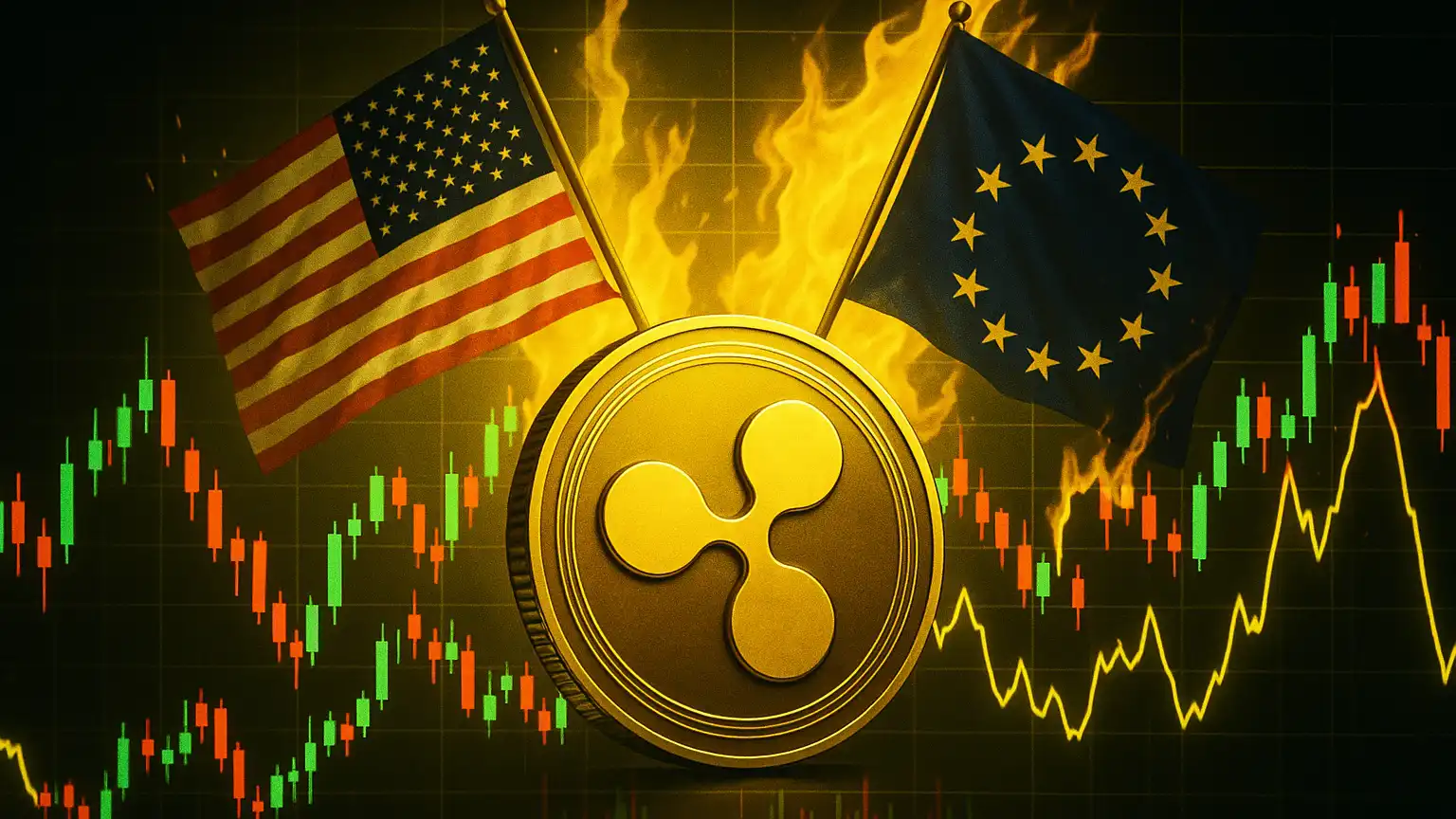
Ripple’s native cryptocurrency, XRP, has recently experienced significant price fluctuations, reflecting broader market reactions to escalating geopolitical tensions between the United States and the European Union. As of January 19, 2026, XRP is trading at $1.98, marking a decline from its recent high of $2.41 on January 6. This downturn aligns with heightened trade disputes stemming from the U.S. administration’s tariff threats over the Greenland issue.
Impact of US-EU Trade Disputes on Cryptocurrency Markets
The cryptocurrency market is not immune to global economic and political developments. The recent announcement by President Donald Trump to impose a 10% tariff on imports from eight European countries—Denmark, Norway, Sweden, France, Germany, the UK, the Netherlands, and Finland—has introduced a wave of uncertainty. These tariffs are set to escalate to 25% by June 1 unless the U.S. secures a deal for the “complete and total purchase” of Greenland. This aggressive stance has been met with strong opposition from European leaders, who view the move as economic coercion and a threat to transatlantic relations.
Such geopolitical tensions have historically led to increased volatility in financial markets, including cryptocurrencies. Investors often react to uncertainty by reallocating assets, which can result in sharp price movements. In this context, XRP’s recent price decline can be seen as a market response to the potential economic ramifications of a U.S.-EU trade war.
Technical Analysis and Market Sentiment
From a technical perspective, XRP’s price movement has been closely monitored by analysts. The cryptocurrency recently tested the $1.9750 support level, a critical threshold for maintaining upward momentum. Failure to hold this level could signal further downside potential. Conversely, a rebound from this support might indicate resilience and a possible recovery.
Market sentiment remains cautious. While some investors view the current dip as a buying opportunity, others are wary of the broader economic implications of the U.S.-EU trade tensions. The uncertainty surrounding international trade policies adds a layer of complexity to investment decisions in the cryptocurrency space.
Broader Implications for the Cryptocurrency Ecosystem
The unfolding trade disputes underscore the interconnectedness of global economies and the cryptocurrency market. As digital assets become more integrated into the financial system, they are increasingly influenced by macroeconomic factors. The current situation serves as a reminder for investors to stay informed about geopolitical developments and their potential impact on market dynamics.
In conclusion, XRP’s recent price volatility is emblematic of the broader market’s sensitivity to geopolitical events. As the situation between the U.S. and the EU evolves, it will be crucial for investors to monitor developments and adjust their strategies accordingly. Staying abreast of both technical indicators and geopolitical news will be essential in navigating the complex landscape of cryptocurrency investments.